

Your team built the strategy, wrote the playbook, and trained the reps. Then you see the real calls in action, and they’re far from what you envisioned when writing the playbook. That gap between the plan and what happens on live calls is a sales execution problem, and it is where most revenue leaks out.
This guide is for sales leaders, RevOps, and the reps doing the work. It covers what sales execution is, the parts of a strong sales execution strategy, where deals quietly break, and how to measure and improve results over time, so you can turn a good plan into consistent revenue.
Key takeaways
- Sales execution is the daily work of turning a sales strategy into closed revenue during live customer calls.
- A sales execution strategy combines a defined process, a sales methodology, real-time enablement, and accurate CRM data.
- Sales execution breakdowns rarely come from a single cause. Some stem from process gaps, while others reflect skill gaps, knowledge gaps, or inexperience. The result is the same: inconsistent execution across customer conversations and missed opportunities to move deals forward.
- Sales execution software improves results by reinforcing the playbook, surfacing guidance, and answering questions while the conversation is still unfolding, instead of relying only on post-call coaching after the opportunity to influence the deal has passed.
- Measuring sales execution requires tracking metrics such as playbook adherence, deal velocity, call quality, CRM data quality, win rates, and whether reps consistently execute the sales process.
- A sales execution plan documents stages, exit criteria, the chosen methodology, and review cadence so every rep follows the same standard.
What Is Sales Execution and Why It Matters for Revenue Teams
Sales execution is the day-to-day work of turning a sales strategy into closed revenue. It is how reps apply the playbook in real customer conversations, from discovery and qualification to handling objections, advancing deals, and driving the right next steps.
Planning decides what should happen. Execution is what happens when a rep sits across from a buyer. And the time for that work is scarce: by Salesforce’s State of Sales research, reps get under 30% of the week in front of buyers, so every minute spent on administrative work is a minute not spent preparing for customer conversations or moving deals forward.
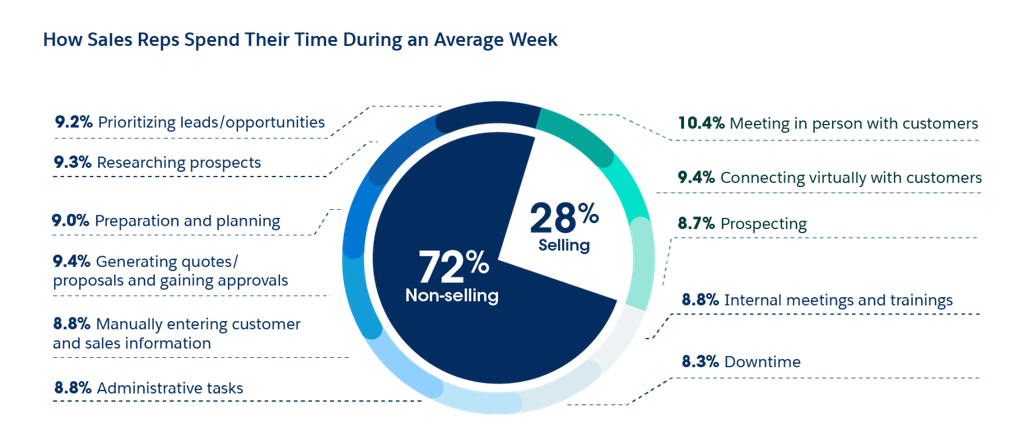
Strong sales process execution protects those selling hours. When reps follow the same steps and log the same fields, leaders get a pipeline they can trust; when they do not, every forecast becomes a guess. For revenue teams, that consistency separates a methodology that lives in a slide deck from one that shows up in the deal.
Core Components of a Sales Execution Strategy
A sales execution strategy is not a single playbook. It is the system that makes good selling repeatable across a team. Four parts carry most of the weight.
- A defined sales process. Clear stages with exit criteria, so a “stage 3” deal means the same thing for every rep and every forecast.
- A methodology reps run on live calls. MEDDICC, SPICED, BANT, Challenger, or Gap Selling only works when it shapes live discovery, not just deal reviews.
- Real-time enablement. Playbook guidance, live answers, company knowledge, battle cards, and the next best action available during the conversation instead of buried in a wiki nobody opens.
- Reliable CRM data. Clean, current fields so handoffs hold and pipeline reviews are based on reality.
RevOps leaders often ask a sharper version of this: what tools support execution of sales strategy? The honest answer is that no dashboard fixes execution after the fact. The tools that change outcomes reach reps in the moment a decision is made, when there is still time to ask the missing question, handle an objection, or guide the next step.
A sales execution plan ties these parts together. It names who owns the process, which methodology the team runs, and how performance gets reviewed, so you can scale the same standard instead of relying on your best rep’s instincts.
Common Sales Execution Breakdowns and How to Fix Them
Most sales execution problems don’t come from a single cause. They happen because reps are expected to manage a complex live conversation while simultaneously applying the playbook, qualifying the deal, handling objections, recalling product and business knowledge, and deciding what to do next. Every customer conversation unfolds differently, making consistent execution difficult even for experienced sellers.

Administrative work is part of that challenge, but it’s no longer the whole story. The bigger issue is cognitive overload: when reps are trying to balance everything at once, important questions go unasked, objections go unresolved, decision-makers stay out of the conversation, and opportunities to move the deal forward are missed.
Here are the breakdowns that cost the most pipeline, and the fix for each.
| Breakdown | Why it happens | How to fix it |
|---|---|---|
| Surface-level discovery | Reps stay at surface-level qualification or move to the demo too quickly | Prompt deeper follow-up questions during the conversation |
| Unresolved buyer questions or objections | Reps lack the right product, technical, or competitive knowledge in the moment | Surface relevant answers and guidance live during the call |
| Playbook drift | The methodology lives in training, not the call | Reinforce the playbook in real time |
| Weak next steps | Reps fail to guide the conversation toward a concrete commitment | Prompt the right next step before the call ends |
| Missing decision-makers | Reps don’t identify or engage the right stakeholders early enough | Prompt reps to identify and engage the right stakeholders earlier |
| Manual CRM updates | Admin work competes with selling time | Capture structured CRM data automatically during the conversation |
The right sales execution software does not add another screen to check. It fits into the team’s existing workflow, reinforces the right behaviour at the right time, and automates the busywork that pulls reps away from the buyer, making it easier for reps to execute the sales process consistently.
That is also the honest answer to what tools improve sales execution: the ones that change rep behavior during the call. Reporting tools only describe what already happened.
How WINN.AI Helps Revenue Teams Execute Smarter in the Field
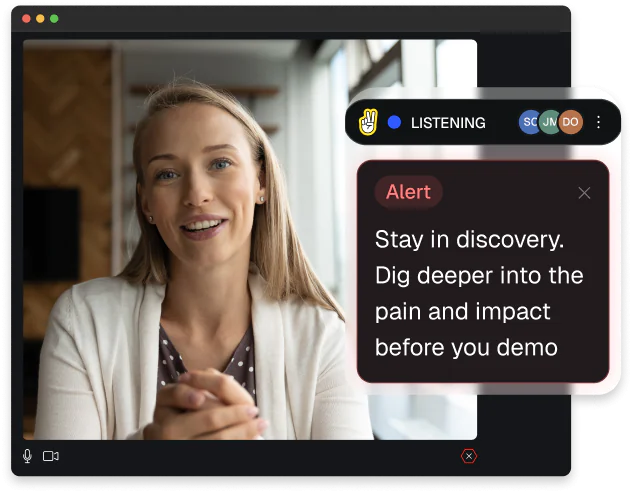
WINN.AI is a revenue execution platform that guides reps in real time. It sits in the live sales meeting, walks reps through the playbook, surfaces answers to questions and objections, and provides guidance throughout the conversation. That live timing is the point. A recording reviewed on Friday can flag the qualifying question a rep skipped on Monday, but it cannot ask it for them. WINN surfaces the question in the moment, so the gap gets closed while the deal is still open.
The product targets the exact breakdowns above:
- Real-time guidance keeps your playbook, methodology, and company knowledge available throughout the conversation, surfacing the right discovery questions, answers to objections, competitor guidance, and relevant information when reps need it most.
- Personalized guidance adapts to each rep and each deal. WINN analyzes the context leading up to the conversation, learns what successful execution looks like for your team, identifies each rep’s recurring execution gaps, and provides guidance tailored to their specific needs.
- Administrative work is automated in the background, including CRM updates, meeting summaries, follow-up emails, and other post-call tasks, so reps can stay focused on the customer instead of manual work.
These outcomes are customer-reported, not guarantees, and they reflect the execution approach described above. At Deel, reinforcing MEDDICC in real time with WINN led to a 33% increase in win rates and 31% higher MEDDICC adoption.
Want to see how live guidance changes execution on your own calls?
Watch it work on a real sales conversation.
The platform closes the loop by giving RevOps and sales leaders visibility into execution, from skipped playbook steps and knowledge gaps to the messaging that works best. Those insights help teams refine their playbook, adjust live guidance, and continuously improve execution across the organization. Your own results will depend on your CRM setup, playbook quality, and team adoption.
For sales leader workflows and RevOps CRM hygiene, that means visibility into what reps do on calls beyond what they remember to log.
How to Measure and Improve Sales Execution Over Time
You cannot improve what you only measure at quarter-end. Strong teams track execution behavior every week alongside the bookings number.
Watch these signals:
- Playbook adherence rate: the share of calls where reps consistently follow your methodology and discovery process.
- Call scores: how effectively reps execute key behaviors during customer conversations.
- Deal velocity: how quickly opportunities progress through the pipeline.
- Meetings completed with agreed next steps: whether conversations end with clear commitments instead of vague follow-ups.
- Ramp time: how quickly new reps reach consistent execution, not just their first close.
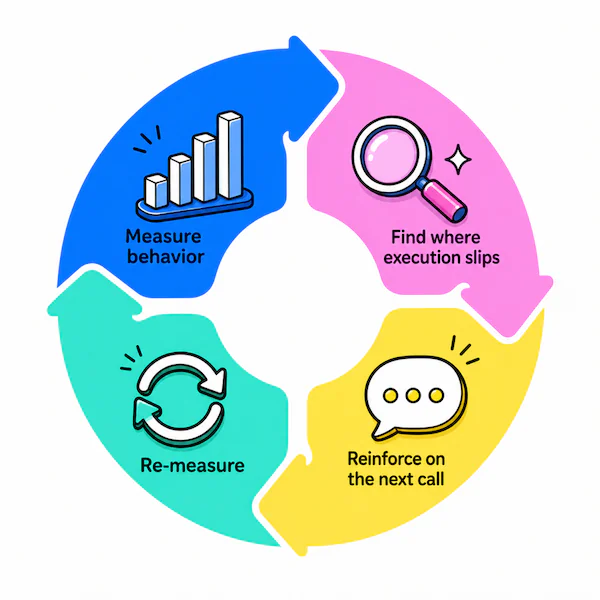
The improvement loop is simple. Measure the behavior, find where execution slips, reinforce it in the next call, and re-measure. A useful tool here is the sales methodology toolkit, which helps a process stick across a team.
This is where a sales execution platform pays off long term. When live guidance and automated capture run on every call, your metrics reflect real behavior, your forecast firms up, and improving sales execution becomes a steady habit instead of a fire drill.
Want to see how live guidance changes execution on your own calls? Request a demo and watch it work on a real sales conversation.
Frequently asked questions
Related

The 2026 GTM Execution Guide for Enterprise Revenue Teams
Key takeaways What Is GTM Execution and Why Most Teams Get It Wrong GTM execution is the daily work of turning a go-to-market strategy into closed revenue across sales, RevOps, and the wider revenue team. It is how reps apply the playbook in real customer conversations, from discovery and qualification to handling objections, advancing deals, […]

How to Reduce Sales Rep Ramp Time with the Right Tools
Key takeaways Why New Rep Ramp Time Is Taking Too Long Reps usually ramp slowly because onboarding has to hold up during live buyer conversations. A plan can look clear in training and still break down when a new rep handles discovery, objections, and next steps in a live conversation. Once reps start selling, improvement […]

Top AI Sales Coaching Software to Boost Performance in 2026
Key takeaways What Is AI Sales Coaching Software AI sales coaching software analyzes sales conversations, scores them against a rubric, and gives reps and managers feedback they can act on. Instead of a manager listening to a handful of recordings, the software reviews every call and flags coaching moments at scale. Definition and core jobs […]