

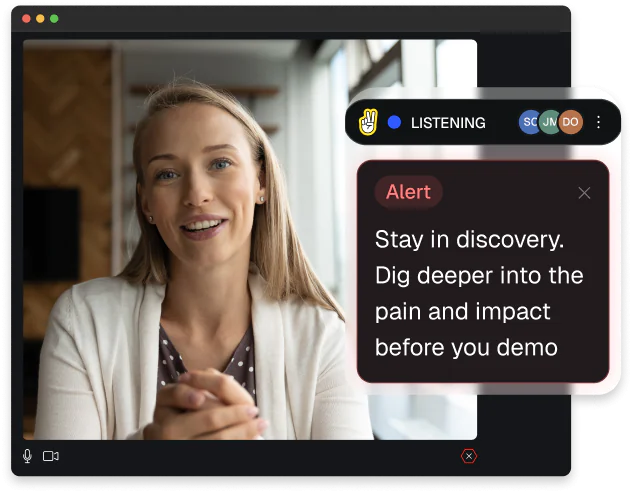
The right tools reduce sales rep ramp time by supporting reps before, during, and after customer conversations, with the biggest impact happening during live calls rather than in another onboarding deck. A new hire ramps faster when the playbook, the answers, and the CRM update show up inside the conversation instead of in a portal they read once. This guide covers the tools that reduce ramp-up time for new sales hires, what each one shortens, and how to build a program around them.
Key takeaways
- Sales rep ramp time measures how long a new hire takes to reach consistent quota performance.
- New rep ramp time increases when onboarding content stays separate from live sales conversations.
- Real-time guidance reduces ramp-up time by reinforcing discovery, qualification, objection handling, and company knowledge during live customer conversations.
- CRM automation shortens ramp-up time by reducing manual updates after meetings and preserving selling time.
- Sales leaders track ramp progress with leading indicators such as discovery quality, playbook adherence, and call outcomes.
- Ramp-up programs shorten onboarding when practice, enablement, call data, and coaching match each onboarding stage.
Why New Rep Ramp Time Is Taking Too Long
Reps usually ramp slowly because onboarding has to hold up during live buyer conversations. A plan can look clear in training and still break down when a new rep handles discovery, objections, and next steps in a live conversation. Once reps start selling, improvement can also be slow because the feedback loop is delayed. Managers need time to review calls, identify recurring gaps, coach the rep, and then wait for future conversations to reinforce that coaching and see whether the behaviour changes.
What ramp time means and the typical benchmark
Sales rep ramp time is how long a new hire takes to reach consistent quota performance, not just to finish onboarding. The timeline tracks deal complexity and sales cycle length: a few months for transactional roles, two or more quarters for complex enterprise deals. The rest of this guide stays on the tools that shorten it.
The real cost of slow ramp (delayed quota, manager drag, missed pipeline)
Slow ramp costs three ways at once. Quota arrives late, so the number you hired for slips a quarter. Managers get pulled into hand-holding, so their strongest reps get less coaching. The pipeline that new hire was supposed to build also starts late.
Why training-week onboarding alone doesn’t transfer to live calls
Onboarding teaches the playbook. It cannot run the playbook for the rep at 2 p.m. on a discovery call. The hard part of ramp is using the methodology while a buyer is talking, an objection lands, and the next question matters.

The Tools That Actually Reduce Sales Rep Ramp Time
Plenty of software promises faster onboarding. The tools that reduce ramp time reach the rep in the moment, when the next question or CRM field matters. The main categories of ramp-up time tools solve different parts of the problem.
| Tool type | What it shortens | Best for |
| Real-time guidance / AI sales assistant | Time to high-quality calls | Reps taking their first live customer calls |
| Role-play and practice software | Time to first-call readiness | Reps practicing before live calls |
| Conversation intelligence and call libraries | Time to learn from top performers | Reps who learn best from real examples |
| Enablement, knowledge bases, and playbooks | Time to find the right answer | Reps hunting for content mid-deal |
| CRM automation | Time lost to admin | Reps managing post-call data entry |
Real-time guidance / AI sales assistants (on-call prompts)
A real-time sales assistant supports reps during live customer conversations by surfacing discovery questions, objection guidance, company knowledge, qualification steps, and other playbook guidance when they need it most. A week-one rep runs the playbook on the actual call, so the methodology reaches the conversation instead of staying in a deck.
Role-play and practice software
Practice tools let reps rehearse pitches and objection handling against simulated buyers before the stakes are real. The first live call should not be the first time a new hire says the words out loud.
Conversation intelligence and call libraries
Conversation intelligence records and analyzes calls, then shows what top performers do differently. New reps study a library of real winning calls instead of guessing.
Enablement, knowledge bases, and playbooks
Enablement tools store answers about pricing, competitive positioning, and technical specs. A rep mid-call rarely has time to search. Knowledge helps more when it reaches the rep in context during the conversation instead of sitting three clicks deep in a wiki.
CRM automation (less admin, more selling reps)
New reps lose a large share of their week to admin, and the cost is higher early when nothing is muscle memory. Reps spend much of the week on admin, not selling, and a ramping hire starts from an even smaller base. Automation that captures call data and updates the CRM gives selling hours back, so a ramping rep practices selling instead of typing.
How to Build a Ramp-Up Program Around Your Tools
Tools do not reduce ramp time on their own. The program matters: which tool supports which milestone, and how managers coach from what the tool captures. Streamlining new employee ramp-up time depends on sequence, timing, and coaching.
Map tools to ramp milestones (week 1 / month 1 / month 3)
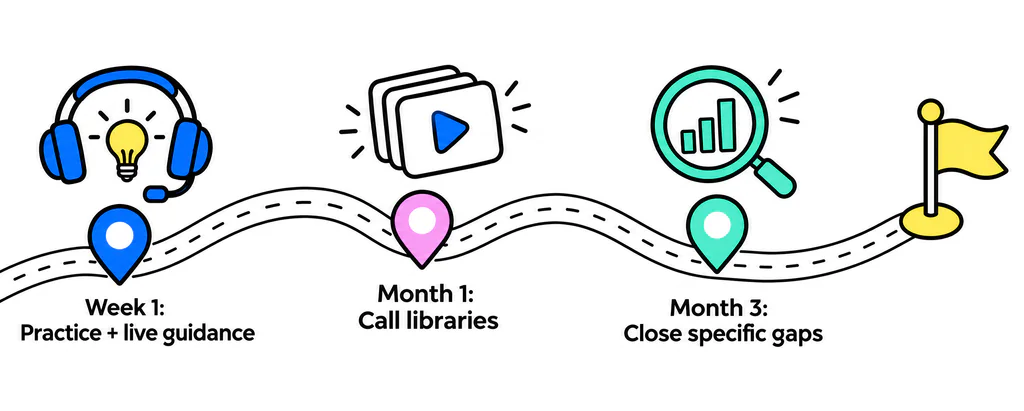
Match the tool to the stage. Week 1, lean on practice software and real-time guidance for early live calls. Month 1, add call libraries so reps can study strong examples. Month 3, use call data to find and close their specific gaps. Sequencing beats dumping every tool on a new hire at once.
Put the playbook where reps work (the live call), not in a doc
A playbook in a document is easy to ignore under pressure. Put it where the rep works: inside the conversation, as a live prompt. The next step appears when the rep needs it.
Pair every tool with a coaching loop
No tool replaces a manager. Pair each tool with a coaching loop. Review call data, identify recurring skill, process, or knowledge gaps, reinforce one improvement on the next call, then measure whether execution improves over time. The manager turns the observed behavior into a habit.
How to Track Ramp Progress and Accelerate Time to Quota
Ramp improves when you measure it before quarter-end. Watch ramp weekly, including behavior and bookings, so you can catch a stuck rep while there is still time to help.
Metrics that matter (time to first deal, time to quota, activity-to-outcome)
The tools in your ramp stack should surface outcomes, not just activity. Watch time to first deal, time to consistent quota, and the ratio of activity to outcomes a rep produces. A rep making 60 calls with no meetings has a different problem than a rep with meetings and no closes, and the right tool tells you which.
Using call data to spot stuck reps early
Call data from your conversation and guidance tools is the earliest evidence you have. Weak discovery, skipped qualification, or fumbled objections show up in the call record weeks before the quota number does. That lead time is what lets a manager coach a stuck rep while the outcome can still change.
Leading indicators vs. lagging quota numbers
Quota attainment only confirms what already happened. Leading indicators like playbook adherence and discovery quality, captured by the tools above, show where a new rep needs coaching next. For the workflows behind this, see how sales leaders get visibility into rep execution.
How WINN.AI Cuts New Rep Ramp Time from Day One
Of the tool categories above, the one that reaches a week-1 rep during the live call is real-time guidance. Ramp ends when your rep can run a live sales conversation without a manager rescuing every next step.
That is the job WINN.AI takes on for new hires. It gives new reps personalized guidance during live customer conversations while giving managers the execution insights they need to coach more effectively.
Live playbook prompts so a week-1 rep runs discovery like a tenured rep
WINN guides new reps through live customer conversations by reinforcing the right methodology, surfacing relevant company knowledge, and providing support where each rep needs it most. The guidance adapts over time, helping reinforce the methodology steps, skills, and behaviours each rep needs the most support developing. A week-one rep can follow MEDDICC or your own framework because the prompt arrives when it is needed.
That matters in ramp. New reps rarely fail because they never learned your process. They fail because the process disappears when a buyer changes direction.

Live Answers from company knowledge
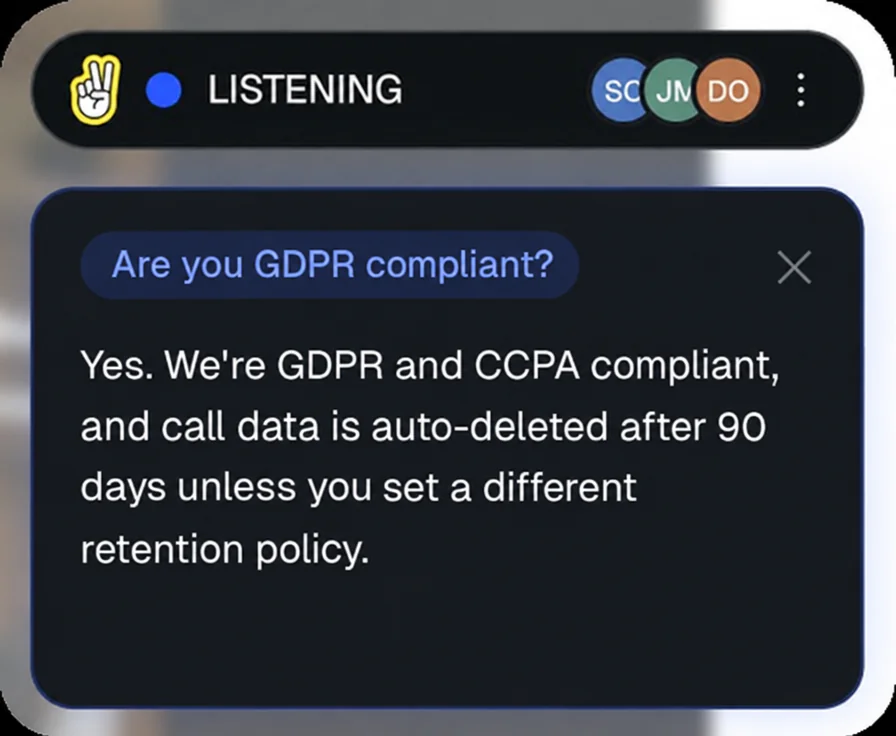
When a buyer asks something tough, WINN pulls Live Answers from your company knowledge during the call. A new hire can give a sharper answer without searching through a deck or promising to follow up later.
The rep still owns the conversation. WINN gives them the context and answers they need to keep the conversation moving confidently.
Auto CRM updates and summaries managers coach from
WINN captures the conversation, updates the CRM, then generates the summary and follow-up. Reps spend less time rebuilding the meeting from memory, and managers get structured execution data they can use to identify recurring coaching opportunities and measure progress over time.
Proof points: customer and homepage results
These are customer results, not a promise. When Deel built MEDDICC into WINN.AI, reinforcing the methodology live during calls lifted methodology adoption and win rates. WINN also reports a meaningful lift in playbook adoption within the first weeks.
Results depend on CRM setup, playbook quality, and team adoption. The useful takeaway for ramp is narrower: new reps get the most support when the playbook follows them into the call, not when it waits in the onboarding portal.
To see how this works on your team’s calls, request a demo.
Frequently Asked Questions
Related

Best Sales Training Software that Builds Top Performers
Your reps finish onboarding, ace the quiz, then revert to old habits on the first live call. That gap is the whole problem. The best sales training software closes that gap by reinforcing the right behaviors during live customer conversations, not just in training modules. This guide compares the main categories of sales training platform, […]

The 2026 GTM Execution Guide for Enterprise Revenue Teams
Key takeaways What Is GTM Execution and Why Most Teams Get It Wrong GTM execution is the daily work of turning a go-to-market strategy into closed revenue across sales, RevOps, and the wider revenue team. It is how reps apply the playbook in real customer conversations, from discovery and qualification to handling objections, advancing deals, […]