

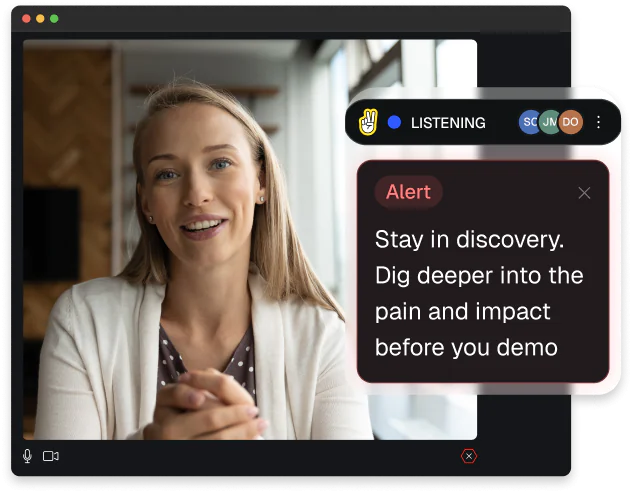
A qualified pipeline is not the same as closed revenue. Deal execution is the work in between: moving an opportunity from active buyer conversations to a signed contract without it stalling in a mid-funnel stage. A demo can go well and the deal can still stall if nobody confirms who approves the purchase, what the buyer needs to do next, or who owns the next step. This guide is for sales leaders, RevOps, and the reps running the deals. It covers what deal execution is, the core components of the process, where deals quietly break, and how to improve execution across your team.
- Deal execution is the process that moves a qualified B2B opportunity from active sales conversations to closed revenue.
- A deal execution process usually includes qualification, stakeholder mapping, mutual action planning, consistent execution during buyer conversations, and accurate deal data.
- Sales deal execution often breaks when next steps, decision criteria, or buyer ownership stay unclear after discovery.
- A deal execution playbook gives reps shared stage criteria, required questions, and repeatable actions for live opportunities.
- Teams improve deal execution by reviewing weekly execution signals, including stage slippage, multithreading depth, and meetings that end with clear next steps.
- Real-time sales guidance supports deal execution by reinforcing the playbook, surfacing relevant knowledge, guiding next steps, and capturing deal data while conversations are still happening.
What Is Deal Execution and Why It Determines Revenue Outcomes
Deal execution is the work of moving a qualified opportunity to closed-won. It includes engaging the right stakeholders, handling objections, confirming decision criteria, and driving the next steps that move the opportunity forward.
Qualification helps determine which deals are worth pursuing, while forecasting estimates which opportunities are likely to close and when. Deal execution is the work of progressing those opportunities through the sales process.
Every live deal demands dozens of decisions. Reps need to engage the right stakeholders, respond to new questions, and keep the deal moving as conversations evolve. Administrative work adds friction, but inconsistent execution stalls deals.
The Core Components of a Deal Execution Process
A strong deal execution process is not one big move. It is a few repeatable parts that carry most of the outcome. Four matter most.
- Qualification against a methodology. MEDDICC, SPICED, or BANT only works when reps verify the criteria with the buyer and revisit them as the deal changes. In MEDDICC, for example, that means confirming the metrics, economic buyer, and decision criteria rather than treating them as one-time fields to complete.
- Live objection and question resolution. Buyers raise technical, competitive, and pricing questions without warning. Execution holds when reps can resolve those moments in the conversation instead of deferring to a follow-up.
- Multithreading to real buyers. A single champion is a single point of failure. Map the buying committee and build more than one relationship inside the account.
- A mutual action plan. Agree on the steps to signature with the buyer, with dates and owners. Vague next steps are where momentum dies.
- Accurate deal information. Keep CRM data current so handoffs hold, forecasts reflect reality, and everyone works from the same deal context.
Run these four well and deal execution becomes more consistent across the team. Reps make better decisions, deals keep moving, and forecasts become more reliable.

How to Build a Deal Execution Playbook Your Team Will Follow
A playbook only works if reps use it mid-deal, not just in onboarding. Build it around the decisions reps actually make, then make the right move the easy one.
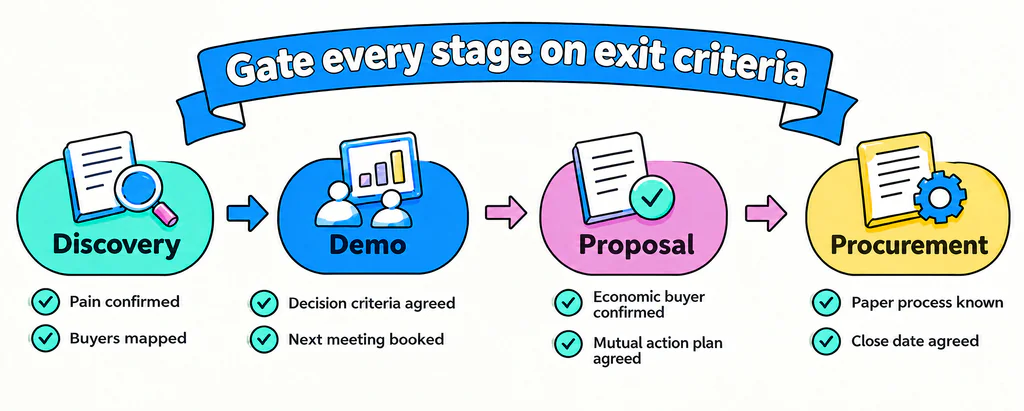
- Map your stages to buyer actions. Define what has to be true to exit each stage, so “stage three” means the same thing for every rep.
- Attach the methodology to each stage. Define the questions, decision criteria, and information a deal needs before it advances.
- Standardize next steps. Give reps a default play for securing the next meeting, the mutual action plan, and the path to procurement.
- Define the essential deal information. Decide which CRM fields every deal must capture, so reviews run on accurate, consistent data.
- Reinforce it where the work happens. Help reps prepare around known deal gaps, access relevant guidance during the conversation, and carry unresolved questions into the next step.
- The sales methodology toolkit is a useful starting point for making a process stick across a team.
For example, take a deal moving from discovery to demo. Before the demo, the rep reviews what is still missing from discovery, such as who approves the purchase or how the buyer will make the decision. During the conversation, the playbook prompts the rep to clarify those gaps while providing relevant guidance and company knowledge as new questions come up. If a required criterion is still missing, the deal does not automatically advance; that gap becomes something to resolve in the next step. After the call, what was confirmed and what remains open is captured so the next conversation starts with the current deal context.
The test of a good playbook is whether a rep can tell what needs to happen next, what still needs to be confirmed, and what should prevent a deal from advancing.
Where Deal Execution Breaks Down in B2B Sales
Most stalled deals don’t come from a single cause. Process gaps, skill gaps, knowledge gaps, and inconsistent execution can all slow momentum and leave opportunities stuck between stages. An opportunity may advance before anyone confirms the decision criteria, or it may rely on a single champion until that contact goes quiet.
Some breakdowns need to be addressed while the buyer is still there: the rep can ask a follow-up question, clarify an objection, or agree on a concrete next step. Post-call review serves a different purpose, helping managers and reps identify recurring skill and process gaps and improve the next conversation. Strong deal execution depends on both.
Here are five common deal execution breakdowns and how to address them.
| Breakdown | Why it happens | How to fix it |
| Single-threaded deals | Reps don’t identify or engage the right stakeholders early enough | Map the buyer committe and discuss stakeholders during every conversation, using each call to identify who else needs to be in the next one |
| Stage inflation | A deal advances before its exit criteria are met | Gate each stage on the playbook’s required questions and exit criteria |
| Vague next steps | The call ends without a committed action and date | Agree the mutual action plan live, with owners and dates |
| Unconfirmed economic buyer | The rep hasn’t identified the person with authority over the economic decision | Confirm the economic buyer and decision criteria before you forecast the close |
| Unanswered buyer concerns | Reps lack the product, technical, or competitive knowledge to respond confidently in the moment | Surface proven answers, competitive positioning, and product knowledge live during the call |
| Stalled deals left open | A slipped deal sits in pipeline without a fresh read | Re-qualify on a set cadence and clear out dead pipeline |
Another dashboard rarely changes the outcome of a live conversation. Teams make more progress when reps can ask the right questions, confirm the next step, capture the right information, and keep the buyer engaged at the same time.
How to Improve Deal Execution Across Your Sales Team
You cannot improve what you only measure at quarter-end. To improve deal execution and support a stronger B2B sales strategy, strong teams track execution behavior weekly, not just bookings.
Watch these signals:
- Discovery depth: whether reps qualify the business pain, impact, and urgency behind the initial problem, or move to the demo after surface-level answers.
- Methodology adherence: whether reps consistently complete the required qualification steps before advancing a deal.
- Objection handling: whether reps resolve concerns during the conversation or defer them to follow-ups, and how often unaddressed objections correlate with stalled or lost deals.
- Multithreading depth: which buyer roles are actively engaged, how much the deal depends on one contact, and whether the rep understands how the decision gets made.
- Meetings ending with clear next steps: how consistently reps leave each conversation with agreed actions, owners, and timelines.
- Stage conversion: where opportunities stall reveals which part of the deal execution process is breaking.
- Slippage rate: how often committed deals push to the next quarter.
Measure the behavior, identify where execution breaks down, reinforce the right behaviors on future calls, and measure again. Done consistently, that turns deal execution from a quarterly fire drill into a steady habit and gives sales leaders and RevOps better visibility into where deals are progressing, where they are getting stuck, and what needs to improve.

How WINN.AI Powers Deal Execution on Every Call
Deal execution can break down in the playbook or in how reps apply it. Even a strong playbook only helps if reps can use it while qualifying, multithreading, confirming next steps, and keeping the buyer engaged throughout the deal.
That is where WINN fits. It brings the context of the deal into the rep’s preparation and live conversation. If budget was left unconfirmed on the previous call, for example, the rep can see that gap before the next meeting and plan to address it. During the conversation, live guidance helps the rep follow through while responding to what the buyer actually says.
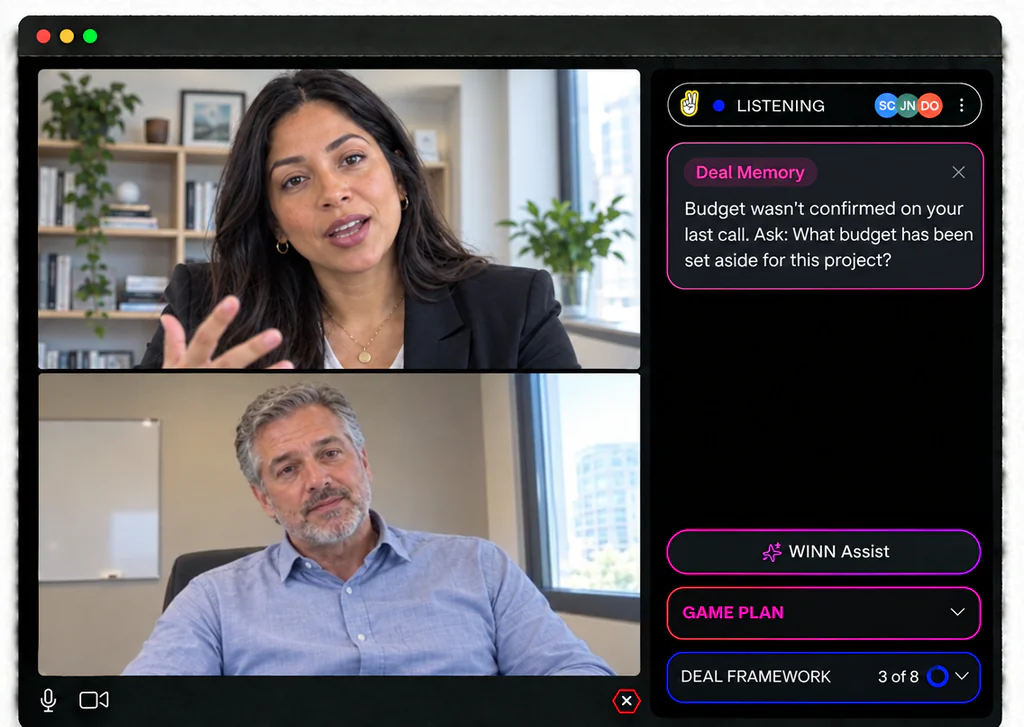
For deal execution, the useful jobs are practical:
- Real-time playbook guidance keeps MEDDICC, SPICED, or your own framework active throughout the deal, while surfacing the right questions, answers, and next steps when reps need them most.
- Personalized guidance learns what successful execution looks like for your team, identifies each rep’s recurring execution gaps, and adapts its recommendations to help them execute more consistently.
- Post-call workflows and insights turn the conversation into CRM updates and meeting summaries, while follow-up emails are drafted for the rep to review and send. Signals and insights can also surface deal risks, recurring execution gaps, and coaching opportunities for managers.
The results are customer-reported rather than guaranteed. Deel increased win rates by 33% and achieved 31% higher MEDDICC adoption after reinforcing the methodology in real time with WINN. Results depend on your playbook, CRM setup, and team adoption.
If you want to see how live guidance fits your process, request a demo with a real sales workflow in mind: the stage rules, stakeholder engagement, next-step decisions, and deal risks your reps miss today.
Related

How to Reduce Sales Rep Ramp Time with the Right Tools
Key takeaways Why New Rep Ramp Time Is Taking Too Long Reps usually ramp slowly because onboarding has to hold up during live buyer conversations. A plan can look clear in training and still break down when a new rep handles discovery, objections, and next steps in a live conversation. Once reps start selling, improvement […]

The 2026 GTM Execution Guide for Enterprise Revenue Teams
Key takeaways What Is GTM Execution and Why Most Teams Get It Wrong GTM execution is the daily work of turning a go-to-market strategy into closed revenue across sales, RevOps, and the wider revenue team. It is how reps apply the playbook in real customer conversations, from discovery and qualification to handling objections, advancing deals, […]

Best Sales Training Software that Builds Top Performers
Your reps finish onboarding, ace the quiz, then revert to old habits on the first live call. That gap is the whole problem. The best sales training software closes that gap by reinforcing the right behaviors during live customer conversations, not just in training modules. This guide compares the main categories of sales training platform, […]